Croatia Restores Conscription as Hundreds of Teenagers Begin Military Training
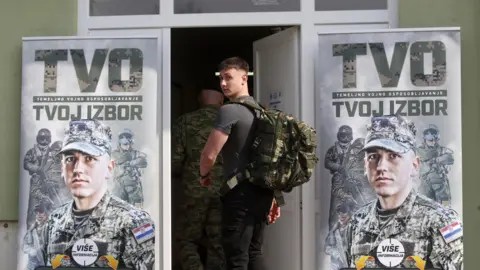
Croatia has reinstated compulsory military service for the first time since 2008, with roughly 800 young people reporting to training centres this week.
The move marks a major shift in the country's defence policy amid growing regional tensions.
Recruits are being processed at barracks in three locations, where they receive uniforms, gear and dormitory assignments. They will spend two months under military discipline as they work through basic training routines.
Senior military officials say the transition from civilian life will be gradual to limit stress on new conscripts.
Mobile phones are largely permitted, although their use will be restricted during training sessions. More than half of the first intake volunteered rather than waiting for call-up notices.
About one in ten conscripts are women, who are not required to serve under the new rules.
So far only a small number—around 10 people—have declared themselves conscientious objectors. Those individuals will be assigned to four months of civilian service and will receive significantly less than the €1,100 monthly stipend paid to military trainees.
The curriculum combines traditional soldiering with modern skills, including basic drone operation and protection, plus cyber-defence techniques.
Defence leaders describe the programme as dynamic and tailored to contemporary threats. Croatia says the decision was prompted by the changed security landscape after Russia's invasion of Ukraine and the country’s geographic proximity to the conflict.
Officials argue the neighbourhood is no longer as stable as it once was.
The move has echoes across the region. Slovenia’s main opposition has urged a return to conscription, and Serbia has said it will bring back mandatory service within a year while boosting defence spending.
Those shifts have raised unease in Kosovo and Bosnia, and analysts warn that arms buildups can provoke a cycle of regional insecurity.
Croatia plans three further intakes before year-end and aims to train about 4,000 conscripts annually going forward. The country joins roughly nine other NATO members that have reinstated or maintained compulsory service, including Greece, Turkey and several Nordic and Baltic states.